Crumple Zone : Crash & Smash
SimplyplayRacing
3.722.00 Reviews
- Version
- 0.4
- Installs
- 50.00K
- Age Rating
- Everyone
Screenshots
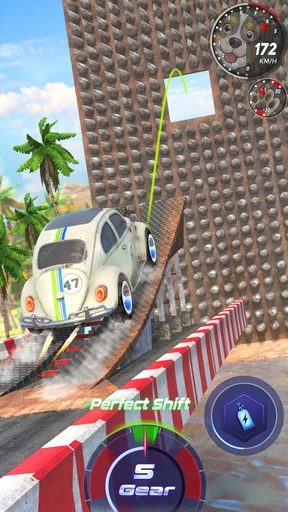
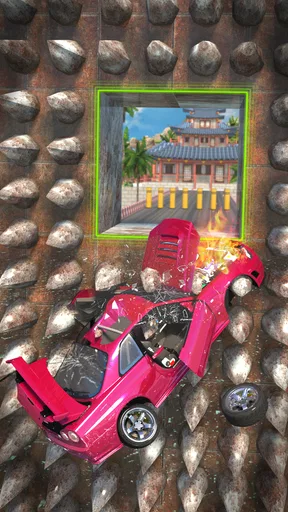
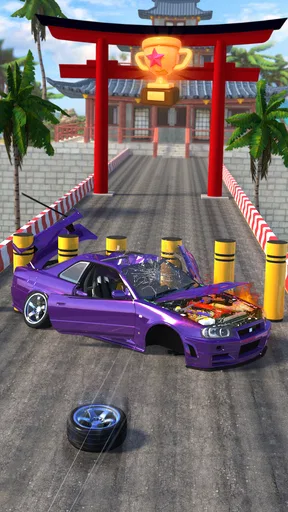
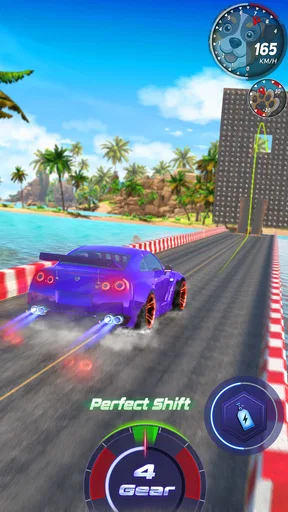
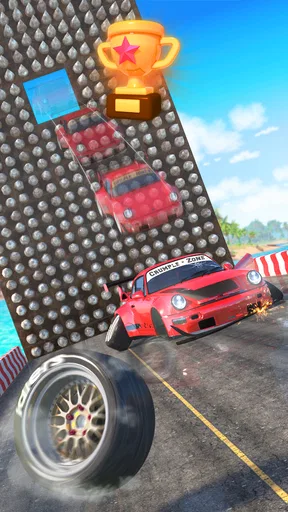
Our Review of Crumple Zone : Crash & Smash
 Analysis by Appyee
I approached Crumple Zone: Crash & Smash as a quick racing game rather than a traditional lap-based driving simulator. Its central idea is simple: launch cars into jumps, judge the risk, and see how far the vehicle can survive the landing. That focus gives it an immediate, easy-to-understand identity, but it also means the experience depends heavily on timing, visual attention, and a willingness to repeat attempts.
After spending time with it, I think the game is most appealing to people who enjoy short bursts of physics-based racing and do not need a large career mode or a deep collection of driving systems. It is free to start, rated for Everyone, and comes from Simplyplay. The current release is version 0.4, so I see it as a compact experience that may still feel more limited than established racing games.
How clearly the game communicates what to do
I find the game’s clearest appeal is how its jump-and-impact premise makes the objective easy to understand, even when the result takes practice. In this section, I’m looking at how that simple goal translates into decisions during a run, and why reading the whole sequence matters more than reacting only at the landing.
Readability and navigation during a run
The strongest part of the concept is that the objective is easy to grasp. You are not asked to learn a complicated racing vocabulary before playing. The car jumps, the landing matters, and the result comes from balancing momentum with the consequences of a bad impact. That makes the game approachable for someone who normally avoids racing titles because they appear overloaded with menus, tuning screens, and technical settings.
In my experience, this kind of design works best when I treat each attempt as a small experiment. I look at the approach, decide whether to commit to the jump, and then pay attention to how the car behaves after leaving the ground. The game’s appeal comes from that quick loop rather than from a long explanation. A new player can understand the basic challenge quickly, while a more experienced player can start thinking about consistency and risk.
The short description, “Crumple Zone,” also points toward the game’s personality: the vehicle is not merely a tool for reaching a finish line. Damage and impact are part of the entertainment. That distinction matters when comparing it with conventional racing games. If you want clean laps, overtaking, and realistic track discipline, this will feel unusual. If you enjoy watching a carefully planned jump turn into a spectacular mistake, the premise is much more inviting.
Navigation is easier to judge when the game is played in short sessions. I can pick it up, attempt a few jumps, and stop without feeling that I have abandoned a long race. That is useful on a phone when I have only a few minutes, such as while waiting for an appointment. The compact format also reduces the pressure on players who find extended races tiring or difficult to follow.
Why the visual information matters
Physics-focused games often communicate through movement rather than text. Here, the important information is likely to be the car’s position, its angle in the air, the shape of the landing, and the immediate outcome of a collision. That can make the game feel direct, but it also creates a readability trade-off: players who process motion slowly or have difficulty distinguishing fast changes may need more time to understand what caused a failed attempt.
My practical advice is to begin by watching the whole jump instead of reacting only at the final moment. The approach speed, the takeoff angle, and the vehicle’s rotation form one sequence. Focusing exclusively on the landing can make the game seem random, while observing the setup reveals where the risk began. This is one of the more useful ways to learn the game without relying on a tutorial-heavy structure.
Players who prefer large text, strong contrast, or adjustable visual presentation should keep their expectations measured. The game’s confirmed identity is centered on racing and crashes, not on extensive customization for different visual needs. I would therefore try it on the intended device before committing to long sessions, especially if small interface elements or rapid animation usually cause discomfort.
Learning without a traditional racing background
I do not think you need prior experience with console or simulation racing to understand the attraction. The challenge is less about memorizing a track and more about reading a moment. That makes it friendlier than a serious driving simulator in one respect, because you are not expected to manage a large set of controls or vehicle settings before enjoying the first attempt.
At the same time, the simple premise should not be mistaken for a completely effortless game. A player may understand the goal immediately and still struggle to produce a satisfying landing. That gap between knowing what to do and doing it well is where the replay value comes from. For younger players, the Everyone rating makes the theme broadly suitable, although an adult may still want to see how the crash-focused presentation feels for a particular child.
Control demands, sensory comfort, and everyday access
I’ll focus here on the practical demands of playing on a phone: following fast movement, making repeated touch inputs, and deciding when a short session is enough. Those details can affect comfort as much as skill, so they’re worth considering before choosing when and where to play.
Motor considerations for touch players
A jump-based racing game can be more physically demanding than its simple description suggests. Even with a small control set, successful play may require quick taps, sustained attention, or repeated adjustments. Players with limited finger movement, tremors, joint pain, or difficulty making precise gestures may find the difference between a controlled landing and a destructive one frustrating.
I would approach the controls by using the lightest touch that still produces a reliable response. Pressing harder or making exaggerated gestures rarely helps in a game built around timing. A stable grip also matters: resting the phone on a table can reduce accidental movement and make short attempts less tiring. This is a small change, but it can make the experience more manageable for anyone who finds handheld play uncomfortable.
The game is a better fit for players who can tolerate repeated, brief actions than for someone looking for relaxed, one-handed play with minimal precision. That does not make it inaccessible to every player with motor limitations; it simply means the central challenge may overlap with the same movement demands that make some racing games difficult.
There is also a useful distinction between physical effort and cognitive effort. A player may have no trouble touching the controls but still find it demanding to anticipate the car’s motion. Conversely, someone who finds rapid visual decisions tiring might prefer to make several exploratory attempts without chasing a perfect result. I found that changing the goal from “win immediately” to “learn one part of the jump” made the experience less stressful.
Sensory load and the impact-focused presentation
The crash theme is the game’s hook, but it will not suit everyone. Repeated impacts, sudden movement, and the visual drama of a car failing a jump can be exciting for one player and unpleasant for another. Anyone sensitive to motion, flashing effects, loud sounds, or collision imagery should test the game cautiously and keep sessions short at first.
One practical routine is to play in a quiet environment and lower the device volume before the first attempt. That does not change the game itself, but it gives the player more control over the surrounding sensory load. If the action begins to feel overwhelming, stopping after a few runs is sensible; the short-session structure makes that easier than leaving a long race unfinished.
Players with color-vision differences may also want to pay attention to whether important information is communicated through color alone. The core challenge should ideally be understandable from movement and position, but I would not assume that every visual cue will be equally clear to every player. Watching a few attempts before spending money inside the game is the safest approach.
Why the free entry point helps, and where it stops helping
The game can be tried without an upfront purchase, which is valuable for accessibility decisions. Someone can check the control feel, visual pace, and crash presentation on their own device instead of relying on screenshots or a description. That is particularly important for players whose comfort depends on screen size, touch sensitivity, or how quickly the action is displayed.
There are in-app purchases ranging from $9.99 to $179.99 per item. Those prices make it important to separate “can I play it?” from “can I comfortably afford every optional path?” I would treat the free entry as an opportunity to evaluate the basic experience, not as a promise that every available item will be equally accessible financially. Families should also consider purchase controls before handing the device to a child.
The game’s audience size gives some context without settling the question of quality. It has passed 50 thousand installs and holds a 3.7 average from 724 ratings, with 22 written reviews. I read that as a sign of a modest player base with mixed reactions rather than a universal recommendation. Those figures appear only once here because the more important question is whether the game’s particular style works for you.
Situational access: when it fits naturally
This is a good candidate for short, interruption-friendly play. If I have a few spare minutes, I can focus on one jump sequence rather than reserving time for a full race. That makes it more practical than many traditional racing games for commuting breaks, waiting rooms, or casual play at home. The trade-off is that the same stop-and-start format may make it harder to build concentration if the player needs a calm, uninterrupted rhythm.
Screen size can change the experience considerably. On a smaller phone, the car and landing area may be harder to follow, especially during fast movement. A larger display could make the visual relationship between the vehicle and the jump easier to read, but it may also be less comfortable to hold. I would choose the device that gives the best balance between visibility and grip rather than assuming the biggest screen is automatically better.
The minimum operating system is Android 7.1, which gives the game a relatively broad compatibility range for Android users with older devices. Compatibility alone does not guarantee a smooth or comfortable session, though. Device performance, display quality, touch response, and battery condition can all affect how enjoyable a physics-heavy game feels. Testing the opening sessions is more useful than judging solely by the operating-system requirement.
Who should choose something else
I would skip this game if your main reason for downloading a racing title is realistic competition against other drivers, detailed car customization, or a long progression campaign. A conventional arcade racer will probably offer a clearer sense of speed and route mastery. A simulation will be better for people who want careful steering, braking, and vehicle behavior rather than deliberate crashes.
I would also be cautious if repeated failure quickly feels discouraging. The design depends on trying again after a poor landing, and the same player may need to accept several imperfect attempts before a jump feels predictable. That can be satisfying for someone who likes experimentation, but it can feel like friction for anyone who wants immediate, reliable success.
Players who need extensive accessibility controls should not choose it solely because the age rating is Everyone. An age label describes suitability in broad terms; it does not tell me whether the controls, motion, sound, text, or visual effects will meet a particular player’s needs. The free starting point is useful precisely because these personal differences are difficult to predict from a store page.
Three ways to get more from each attempt
Use the first few runs to identify the approach rather than chasing distance. Watch how the car reaches the jump, because a poor setup can make the landing seem harder than it really is.
Change only one habit at a time. If you alter timing, grip, and viewing angle together, you will not know which change helped. Treating each attempt as a small test makes the physics easier to understand.
Stop before frustration turns into careless repetition. Since the game is built for brief sessions, taking a break is not losing progress in the usual racing-game sense; it is a way to return with better attention.
These habits are especially useful for players with different concentration or motor needs. They reduce the pressure to react perfectly and turn the game into a more deliberate observation exercise. They also reveal whether the core challenge is enjoyable for you before you consider any optional purchase.
My inclusive verdict
I see Crumple Zone: Crash & Smash as a focused, free-to-try racing game with a clear personality. Its best quality is the immediacy of the idea: every jump asks whether I have judged the moment well enough to survive the landing. It works nicely for casual players who enjoy physics, controlled risk, and short attempts, and the Everyone rating makes it broadly approachable in theme.
Its limitations are equally clear. The action may be difficult for players who need slow, highly adjustable controls, and the crash-centered presentation can be uncomfortable for people sensitive to motion or impact effects. The free starting point helps with personal testing, while the in-app purchase range means families and budget-conscious players should remain careful about optional spending.
Simplyplay’s game is therefore not my universal recommendation for racing fans. I would suggest it to a friend who wants a compact challenge built around jumps and consequences, especially if that friend enjoys learning through repetition. I would point someone else toward a conventional arcade racer or a more configurable title if they need extensive control options, calmer presentation, or a deeper driving structure. In the right context, this is an entertaining experiment in timing; outside that context, its narrow focus becomes the main reason to move on.
Verdict
Strengths of Crumple Zone : Crash & Smash
- Satisfying crash physics make every collision feel impactful.
- Short sessions are ideal for quick entertainment on mobile.
- Simple controls are easy to learn from the first launch.
- Vehicle and environment variety keeps destruction runs feeling fresh.
- Offline play makes it convenient for travel or limited connectivity.
Limitations of Crumple Zone : Crash & Smash
- Repeated crash objectives can become predictable over longer play sessions.
- Physics results may occasionally feel inconsistent or exaggerated.
- Visual detail may vary noticeably between vehicles and stages.
- Progression can feel slow if upgrades depend heavily on repeated runs.
- Ads or optional purchases may interrupt the otherwise fast-paced experience.
Similar Picks in This Category
View All
Hill Climb Racing
Fingersoft4.3

Dr. Driving
SUD Inc.4.2

Traffic Rider
skgames4.5

Asphalt 8 - Car Racing Game
Gameloft SE4.6

Race Master 3D: Car Racing
Beresnev Games4.6

Extreme Car Driving Simulator
AxesInMotion Racing4.3
Frequently Asked Questions
What is Crumple Zone: Crash & Smash?
Crumple Zone: Crash & Smash is a physics-based destruction game focused on vehicle collisions, crashes, and spectacular smash sequences. Players drive into objects, structures, and other obstacles to create damage and earn rewards. The main appeal is experimenting with realistic-looking car deformation and chaotic impacts rather than following a traditional story or racing campaign.
How do you play Crumple Zone: Crash & Smash?
Gameplay is generally easy to understand: control a vehicle, build momentum, aim at targets, and cause as much destruction as possible. Depending on the level or challenge, you may need to hit specific objects, complete a crash objective, or achieve a high damage score. The controls are designed to be accessible, although accurate steering and timing become more important in advanced stages.
Is Crumple Zone: Crash & Smash free to download?
The game can typically be downloaded without an upfront purchase, but availability, pricing, advertisements, and optional in-app purchases may vary between Android and iOS. Before installing, check the official store listing for the current details. Some purchases may provide extra vehicles, remove advertising, or unlock additional content, so review the payment information carefully.
Does Crumple Zone: Crash & Smash require an internet connection?
Many basic crash and destruction levels may be playable offline, which makes the game suitable for short sessions while traveling or when mobile data is unavailable. However, certain features can require an internet connection, including advertisements, cloud services, updates, rankings, or purchases. Testing the game offline after installation is recommended because requirements may change with future updates.
Is Crumple Zone: Crash & Smash suitable for children?
The game is centered on fictional vehicle crashes and destruction, without necessarily presenting realistic injury-focused violence. Even so, parents should check the age rating, advertising policy, and in-app purchase settings before allowing children to play. Younger users may also encounter frequent ads or optional purchases, so parental controls and purchase restrictions are advisable for a safer experience.
Play our best games!


